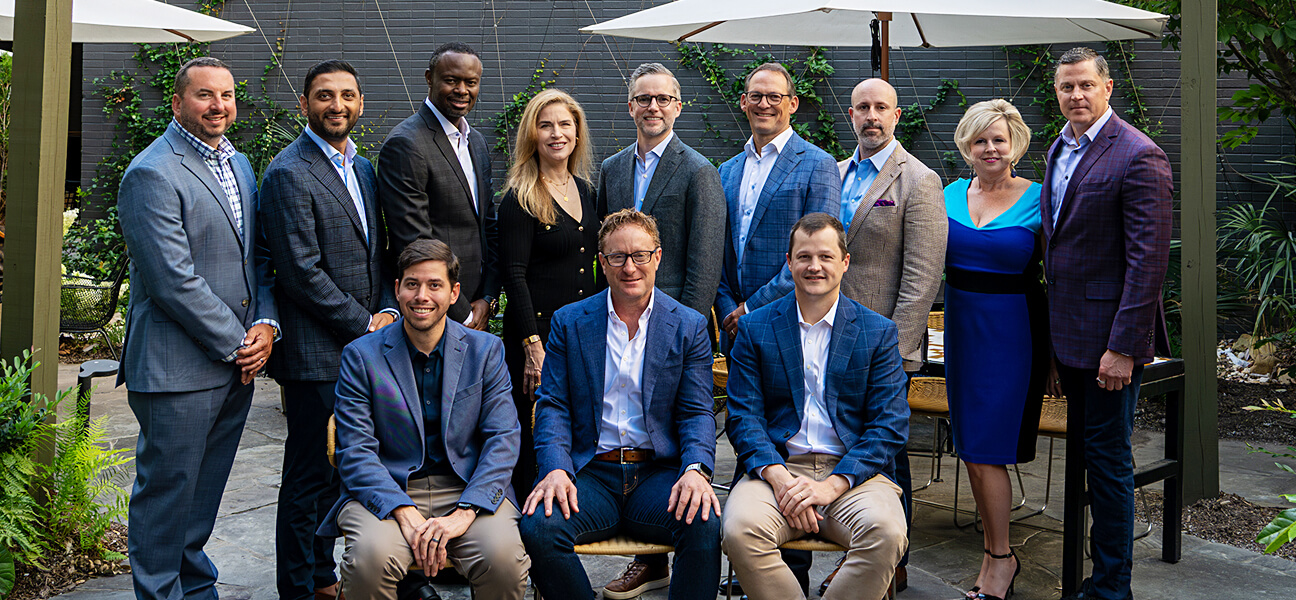
Hotel lending has entered a new and complex phase—one defined by elevated interest rates, cautious capital and the need for precise execution.
Hotel Business recently held an executive roundtable, hosted and sponsored by Peachtree Group, titled “Chasing Smart Money: Where’s the Capital in Today’s Turbulent Market?” where hotel executives led an intimate discussion on navigating today’s challenging capital landscape. As traditional financing sources have tightened and construction costs continue to climb, successful hoteliers have had to find new pathways to funding. Some of the topics this group touched on were:
- Beyond traditional banks—How private credit, alternative lenders and institutional capital are filling the financing gap as banks retreat from hotel lending
- Construction cost reality—Strategies for managing project feasibility when hard costs have increased 30%-40% while debt coverage ratios have tightened
- Market positioning—Which hotel segments and markets are attracting capital, and how to position projects for today’s risk-averse lending environment
- Creative capital structures—Joint ventures, mezzanine financing, CPACE and hybrid debt-equity solutions that are getting deals done
Moderated by Christina Trauthwein, VP, content & partnerships, Hotel Business, the panel included Evens Charles, president/CEO, Frontier Development & Hospitality Group; Michael Coolidge, chief investment/development officer, HRI Hospitality; Mary Beth Cutshall, chief growth officer, Vision Hospitality Group; Billy Gilchrist, chief financial & investment officer, ARK Holdings Group; Michael Harper, president, hotel lending, Peachtree Group; Teague Hunter, president/CEO, Hunter Hotel Advisors; Blake Longstaff, SVP/CFO, Americas, IHG; Jared Schlosser, head, credit originations and commercial CPACE, Peachtree Group: Jason Rabidoux, chief investment officer, Davidson Hospitality Group; and Ricky Raman, COO, PeachState Hospitality.
As hoteliers seek to grow their capital stack to finance transactions and renovations, today’s lending environment can be viewed as challenging compared to the years before and shortly after the pandemic. However, Schlosser pointed out that “there is plenty of capital out there.”
“I think we need to adjust to the fact that we’re in a new world, where we have new underwriting and new rates,” he said. “And, even if rates start getting cut and the world changes a little bit, it’s probably not going back to 2021.”
Harper, his Peachtree colleague, agreed that capital is still available, but noted that the real hurdles lie elsewhere.
“It’s not necessarily in the credit markets,” he said. “The bigger issue is the gap between buyer and seller expectations—and trying to get new construction off the ground today is nearly impossible.”
A consistent theme among hospitality finance professionals is the growing mismatch between what sellers want and what today’s financial structures can support.
“Everybody’s just looking at the risk equation and saying, ‘I need more going-in yield,’” said Rabidoux. “That risk equation right now is a little bit more difficult.”
One of the key sticking points is equity. While debt can still be sourced, equity has largely stepped back from the field. “Everybody wants to be sitting on the credit side,” said Coolidge. “I feel like you find the debt most of the time. But where are you filling in the equity, because that is sitting on the sidelines?”
In this void, private credit has become a critical resource for borrowers seeking to finalize deals. “Private credit is a big part of that today and becoming only bigger and bigger,” said Hunter. “They’re willing to take more risk, and they want to get paid for it.”
But even with that option, the capital stack remains incomplete for many deals. “We have plenty of deals where we have the debt lined up and half the equity lined up,” Hunter said. “We need a little bit more equity to get this deal finally done.”
To bridge these gaps, hotel brands have begun playing a more active role in enabling access to financing. Longstaff pointed out that brand support is no longer optional.
“We’re highly focused on understanding capital trends,” he said. “On the debt side, it’s not something that we historically got into, and we are focused more on that now. We’ve added one resource and will continue to add resources to help our owners, especially new hotel owners, better access debt capital.”
One way deals are being salvaged is through increasingly complex capital structures. Gilchrist explained how developers are now combining traditional loans with alternative tools. “There’s not a development done without key money today,” he said, describing one project that required a senior loan, CPACE financing, brand incentives and mezzanine capital just to pencil out.
Yet, even as the financial environment grows more demanding, some see opportunity. Cutshall believes the pressures are leading to stronger fundamentals.
“This challenging time is also making us better at underwriting,” she said. “I think offering ideas and solutions to approach this challenging market is very beneficial.”
That sharpening of underwriting practices includes a more cautious approach to construction and renovations. Charles stressed that the underwriting process should be “more conservative and hyper-focused on risk mitigation, with more contingency built in, particularly when it comes to construction costs.”
Beyond financial engineering, operational performance is playing a more central role in underwriting decisions. Raman emphasized the importance of selecting the right hotel operator to meet increasingly narrow performance targets.
“They’ll help you deliver the 1% to 5% advantage that you’re underwriting towards,” he said. “You probably didn’t need that 10 years ago because you baked that cushion into your acquisition pricing. Now you need them to be your partner more than ever.”
Make sure to check out the cover story of our upcoming August issue for complete coverage.