During a tour of the newly renovated Waldorf Astoria New York, Chris Nassetta, president/CEO, Hilton, framed the reopening of the famed property as both a personal milestone and a symbol of the company’s broader evolution.
Nassetta’s connection to the hotel dates back nearly two decades, when Blackstone recruited him to lead Hilton during its acquisition of the company. At the time, he said, Hilton was underperforming and the Waldorf Astoria, once one of the world’s most influential luxury hotels, had suffered from decades of neglect.
“This was one of the greatest grand hotels in the world; the hotel that literally invented luxury,” he said. “Over time, it just kept getting handed off to the next generation without ever really being fixed.”
He said restoring the Waldorf was a commitment he made early in his tenure, even as Hilton pursued aggressive global growth. Since joining the company, Nassetta said Hilton has tripled in size, expanded from eight to 26 brands, grown its loyalty program from 20 million members to more than 250 million and delivered strong shareholder returns following its return to the public markets.
Despite those achievements, Nassetta said completing the Waldorf Astoria New York renovation stands apart.
“I’m really proud of having put this on the table and getting it right,” he said. “This building deserved that.”
Nassetta described the renovated hotel as a blend of historic preservation and modern functionality, reflecting lessons learned from years of traveling extensively and staying in Hilton properties around the world. He said guest expectations often come down to fundamentals: cleanliness, lighting, intuitive room controls and especially bathrooms.
“I’m famous inside the company for being a nut about showers,” he said. “Easy to turn on, good pressure, hot water. These things matter.”
He pointed to changes Hilton has mandated systemwide over the years, including upgraded bedding, improved towel standards and simplified room design. He also highlighted Hilton’s Connected Room technology, which allows guests to personalize entertainment and room settings across properties.
Beyond physical design, Nassetta said that Hilton’s workplace culture underpins the guest experience. Hilton has consistently ranked as a top employer globally, which he said directly translates into better stays.
“You cannot be a great place to stay if you’re not a great place to work,” he said.
Looking ahead, Nassetta said he is more optimistic about the hospitality industry than at any point in his career. He described the current environment as a “golden age of travel,” driven by demand for experiences over possessions and supported by technological advances.
Hilton has spent the past decade rebuilding its technology infrastructure, a process Nassetta said accelerated during and after the pandemic. That foundation, he said, allows the company to deploy AI in meaningful ways across the guest journey, from trip planning and booking to on-property service and post-stay engagement.
“You can’t just put AI on top of bad systems and expect good outcomes,” he said. “You need modern platforms, clean data and strong processes first.”
He said Hilton is testing tools that enhance digital discovery and booking while also enabling real-time service recovery and personalization on property. AI-powered systems, he added, can help hotel teams anticipate guest needs, resolve issues faster and operate more efficiently without losing the human element.
“We will always be a people business,” Nassetta said. “But these tools give our teams better information in real time.”
He also addressed Hilton’s long-term brand strategy, noting that while the company has launched several new brands in recent years, future growth will be more measured. He said Hilton is focused on lifestyle segments and adjacent categories, including concepts tied to college markets and extended residential stays, while ensuring existing brands continue to evolve.
“You can’t just keep launching brands without making sure they work,” he said. “They have to have a clear identity and a clear path for owners.”
As the Waldorf Astoria New York prepares to welcome guests again, Nassetta said the reopening reflects both Hilton’s heritage and its ambitions.
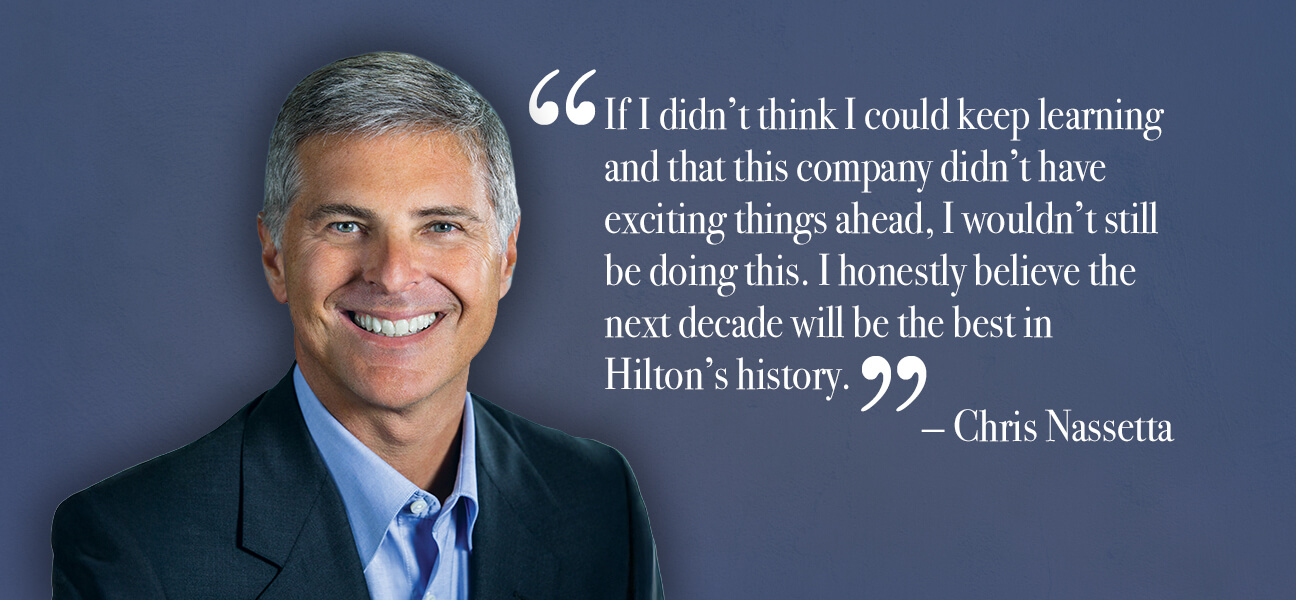
“If I didn’t think I could keep learning and that this company didn’t have exciting things ahead, I wouldn’t still be doing this,” he said. “I honestly believe the next decade will be the best in Hilton’s history.”
The restored Waldorf Astoria New York, he added, is meant to stand as proof of that belief.