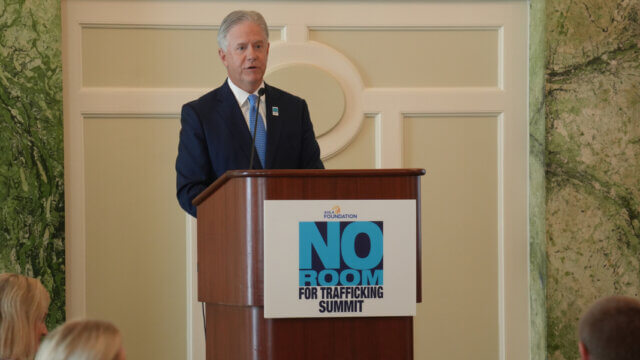
The AHLA Foundation (AHLAF) testified before the Task Force on Enhancing Security for Special Events on the lodging industry’s ongoing anti-human trafficking efforts ahead of major global events that will draw millions of international visitors to the U.S.
In her testimony, Eliza McCoy, VP, programs and impact, AHLA Foundation, emphasized human trafficking prevention as a shared responsibility and the critical moment currently facing the nation, as we prepare for important upcoming events:
“Large events often draw attention to human trafficking, but more importantly they represent a critical moment to turn heightened awareness into long-term strategies that protect vulnerable people year-round—not just during major gatherings,” she said. “We can show, on the world stage, how our actions are leading in human trafficking response and prevention.”
McCoy—who has dedicated her nearly two-decade career to child safety and anti-trafficking programs—also highlighted the lodging industry’s leadership through the No Room for Trafficking (NRFT) initiative. Launched in 2019, NRFT is a comprehensive initiative developed in partnership with member companies, dedicated leaders, law enforcement partners and expert organizations that has translated the industry’s commitment into action, with shared goals and standards aligned with best practices in the anti-trafficking field. The anti-trafficking trainings developed in collaboration with expert NGOs are the cornerstone of the NRFT initiative. Completed more than 2.5 million times since 2020, the trainings are free and available in 34 languages.
“The No Room for Trafficking initiative is an example of the work AHLA Foundation does every day,”said Kevin Carey, CEO and President of the AHLA Foundation. “Our industry is dedicated to investing in our workforce and our communities, and the prevention of human trafficking. The mission of the No Room for Trafficking initiative is threefold: elevate awareness of human trafficking, educate employees to identify and report it and equip survivors with the support they need to thrive.
Looking ahead, McCoy outlined three key actions policymakers can take to maximize the impact of these upcoming events and build lasting change in the fight against human trafficking:
- Support consistent standards for training and anti-trafficking policies not just in the lodging industry, but across all sectors, ensuring no weak links in prevention efforts. The lodging industry’s anti-trafficking commitment can serve as a model for other industries on how collective action creates stronger safeguards and better outcomes.
- Support streamlined reporting processes that effectively leverage the resources of both law enforcement and survivor advocacy organizations.
- Invest government and community resources in long-term solutions, including emergency housing for victims and specialized law enforcement units to strengthen community readiness for years to come.
With these measures in place, she emphasized that the lodging industry can continue to serve as a strong and reliable partner in nationwide anti-trafficking efforts and continues at the ready to work hand-in-hand with the Congressional Task Force, Department of Homeland Security, Department of Justice, local law enforcement and NGOs to ensure upcoming milestone events are remembered for sportsmanship and national unity.
“As we approach the kick-off of these major events, we stand united with law enforcement, survivor support organizations, and policymakers to protect the vulnerable and demonstrate U.S. leadership in preventing human trafficking on a global stage,” McCoy said. “We are doing our part to end trafficking for good and stand at the ready to help our communities meet the moment.”